
Beed Papad Leopard Safari Reserve
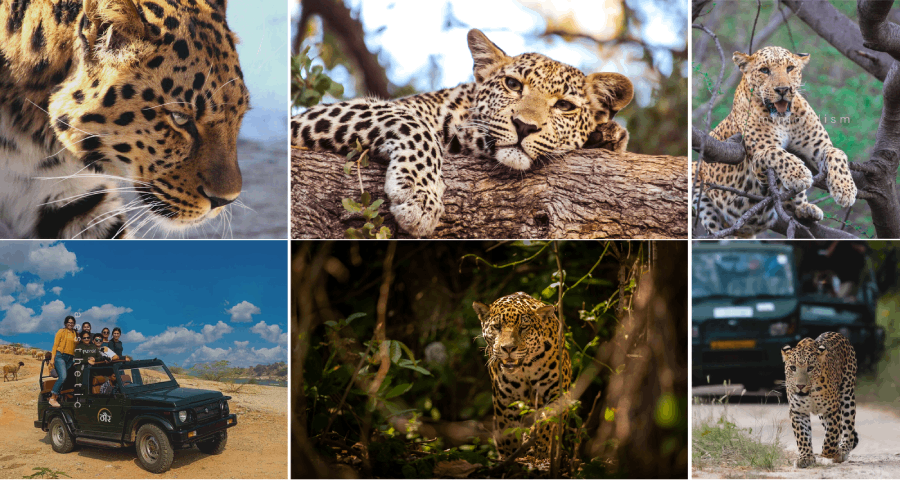
Experience the thrill of a Bheed Papad Leopard Safari Reserve and witness the leopards in their natural habitat!
Starting From
₹1,450
Per Pax

Overview

Fact:
- The third official leopard safari reserve in Jaipur.
- Approximately 22 sq. km of raw, uncrowded terrain.
- Prime leopard sightings at dawn and dusk.
- Part of Nahargarh Wildlife Sanctuary’s Aravalli ecosystem.
- Home to the rare Fringe-Toed Lizard.



Flora
The vegetation at Beed Papad reflects the resilience of the Aravalli range. Rolling ridges of Dhok (Anogeissus pendula) impart a green-grey hue to the hills, while the valleys and grasslands support a hardy mix of drought-tolerant species. You will encounter Indian Babul, Kumtaa, and Indian Elm interspersed with Ber and the flame-colored flowers of Dhak. Saalar and Guggal trees add aromatic resin to the forest air, and the storied Khejri stands sentinel across the landscape. Recent afforestation efforts have introduced native fruit trees such as Shahtoot and Pilkhan to enrich the ecological food web and attract birds and herbivores.
Fauna
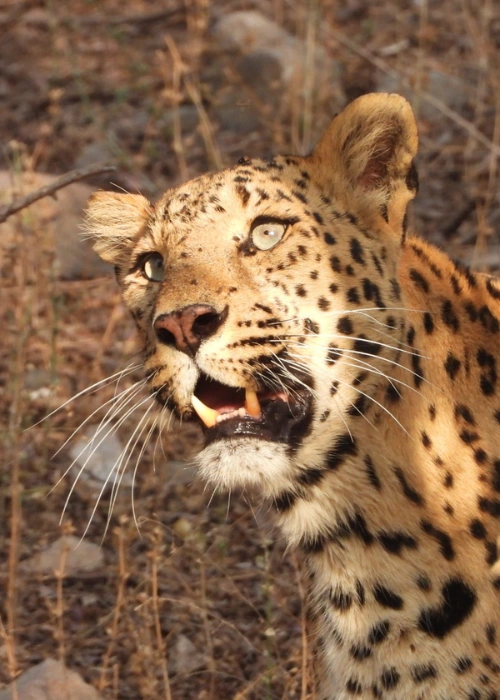
Beed Papad’s wildlife corridor supports a vibrant array of mammals, birds, and reptiles. The elusive Indian leopard reigns here, often seen slinking near rocky outcrops and watering holes. Striped hyenas patrol the forest edges under cover of night, while golden jackals, jungle cats, Indian foxes, nilgai, and hares roam more openly. Birdwatchers will delight in over 160 species, from the colorful Indian Pitta and Paradise Flycatcher to peafowl, woodpeckers, and kingfishers. Reptiles are equally well represented, with more than a dozen snake species, monitor lizards, and the uniquely adapted Fringe-Toed Lizard scurrying across sandy paths.

Best Time to Visit
Beed Papad Leopard Safari welcomes guests year-round, but each season offers a distinct charm:
● Winter (Oct–Feb): Cool, crisp mornings bring heightened wildlife activity and optimal conditions for photography.
● Summer (Mar–Jun): Animals congregate at water sources, increasing the likelihood of leopard sightings.
● Monsoon (Jul–Sep): The sanctuary transforms with lush greenery and a flowing waterfall, though occasional heavy rains may lead to temporary safari pauses.
How to Reach?
Reaching Beed Papad Leopard Safari
Reaching Beed Papad Leopard Safari is straightforward via multiple modes of transport:
● By Air: Jaipur International Airport is located just 18 km from the reserve. After arrival, you can hire a prepaid taxi or arrange a private transfer through World of Wilders, ensuring a comfortable 30–40 minute drive along NH11 and the Nahargarh Wildlife Sanctuary road.
● By Rail: Jaipur Railway Station, 15 km away, is well-connected to major Indian cities. From the station, opt for a metered auto-rickshaw or a pre-booked cab for a scenic 30-minute journey through city suburbs and reserved forest land.
● By Road: The reserve is a 30-minute drive from Jaipur city center. Follow the Nahargarh Wildlife Sanctuary route via Jawahar Circle Road and the Sanctuary entrance gate. The last stretch is a winding hill road, best navigated with an experienced driver—World of Wilders can arrange this seamlessly.
● Local Transfers: For group bookings, we provide air-conditioned coaches or 4x4 vehicles to traverse the rugged terrain inside the reserve.
Booking Form
Indians: Please share your documents (Aadhaar, license, PAN) of each recipient at info@worldofwilders.com to confirm your booking.
Non-Indians: Please share your documents (Passport & Passport Number) of each recipient at info@worldofwilders.com to confirm your booking
Package Cost
| Beed Papad Leopard Safari Reserve | Per Person (Sharing) |
Private Gypsy | Guide | Add-on Shikar Audhi Zone |
|---|---|---|---|---|
| Indian | ₹1450 | ₹7200 | ₹1500 | ₹1375 |
| Non-Indian | ₹2310 | ₹10500 | ₹1500 | ₹1375 |
Know Before you Go
Just six individuals can go in one vehicle. So you can book up to 6 individuals in a single booking of Beed Papad Leopard Safari Reserve. To book more than 6 individuals, you need to fill the booking form twice.
Up to 5 recipients can be booked when adding a guide, as the safari jeep accommodates a maximum of 6 individuals.100% of the amount will be refunded within 1 hour of payment if booking is not confirmed for Beed Papad Leopard Safari Reserve.
Full fees must be paid in advance to book a safari in Beed Papad Leopard Safari Reserve.
ID proof is mandatory for all visitors. Carry the same ID card submitted during online booking when visiting Beed Papad Leopard Safari Reserve.No refunds or cancellations are allowed for approved bookings. Bookings are non-transferable and non-exchangeable.
Beed Papad Leopard Safari Reserve can be booked up to 90 days in advance.
Foreign tourists must provide passport details for reservations.Leopard safari permits are issued on a first-come, first-served basis (subject to availability).
The leopard safari park may close without prior notice.
Visitors must pay the difference for any fee revisions or incomplete occupancy.
Report at the boarding point 25 minutes before the scheduled departure of the safari.
FAQ
Six people can sit in one vehicle.
Yes. A separate permit (On per vehicle basis) needs to be taken for visiting Hunting Lodge. Only four vehicles out of ten are allowed to visit shikaar audhi in one shift.
No. Guides are not provided with the permits. We provide experienced guides during Safari at an additional cost. The guides have extensive knowledge about the reserve, its wildlife, and conservation efforts. They will enhance your safari experience by providing insights and answering your questions.
No, Pick up & Drop is not included in the given package. We provide pick up /drop facility at an additional cost. The Price varies according to the distance. Mainly it is done either in open air gypsy or a cab (whichever is available)
No. As single use plastic is banned in Jhalana Forest Reserve. Majorly all packed materials like chips chocolates come in single use plastic packaging is not allowed inside the jungle. Only bio-degradable packaging is allowed
Both the safari shifts are better for sightings and have their sighting glamour. Generally Leopards are more seen in the first and last one hour of the afternoon drive.
During Summers from April to June weather temperature can soar up to 45 Degrees so you can carry ample drinking water, goggles, hats, scarf and preferred earthy colour cotton clothing.
During the Winter season from November to mid - February temperatures can drop up to 2 Degrees inside the reserve. So heavy woollen jackets, warmers, ear muffs and hand gloves are highly recommended.
During the rainy season from July to October temperatures are an average 27 Degrees with a lot of humidity. Also at this time there is a lot of insect activity inside the reserve. Therefore full sleeves cotton tees and full pants are recommended.
No. Animals in the jungle do not require food from us. God have created them in such a manner that they find their own food. Secondly feeding any wild animal is a punishable offence under Wildlife Protection Act, 1972.
Trending Now
We're Also Providing

Book Cabs
Starts From ₹3000
View Details →

Book Flights
Starts From ₹8200
View Details →

Book Hotels
Starts From ₹3500
View Details →
Book Safaris
Starts From ₹1250
View Details →